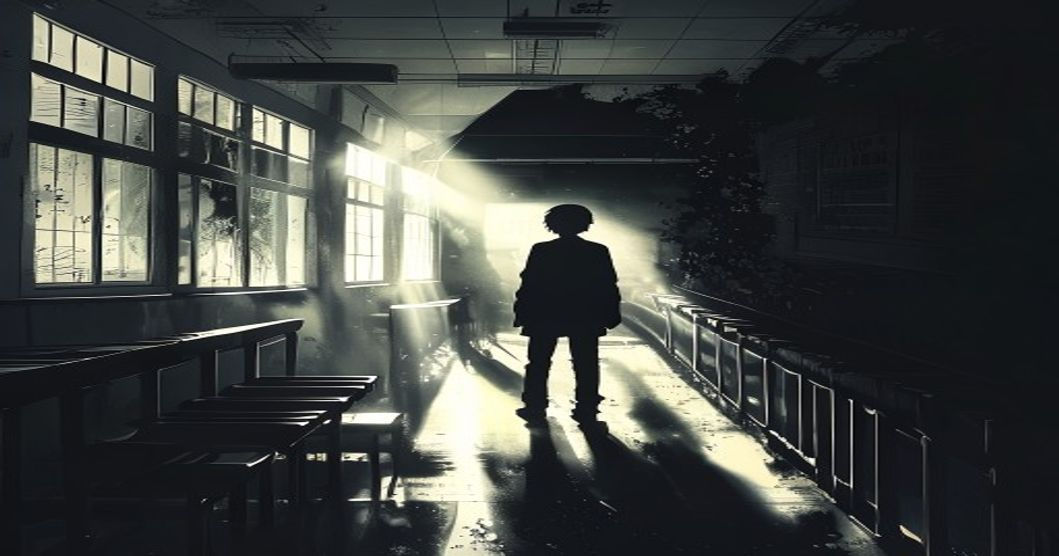
Shadows in the Melody: Unmasking the Duality of ZAQ’s Soundscapes

Shadows in the Melody: The Hidden Truth Behind ZAQ’s Soundscapes
Hey everyone, Osamanga here!
In the opening moments of a story, we’re often greeted by bright, sweeping melodies that capture the refreshing scenery of school life. But have you ever felt, just for a split and a second, that something in the music was... slightly "off"?
It’s that subtle moment—right while characters are smiling on screen—where a piano melody dips into an unsettlingly low register, or a dissonant note slips through. I truly believe that ZAQ’s compositions hold the key to the darker, more visceral truths hidden beneath the surface of this narrative.
Bright Melodies Unmasking a False Reality
Take "Cast Room," the track that sets the stage for the series. At first listen, the vibrant melody seems to celebrate the joys of campus life. But listen closer. There is an underlying nuance in the lyrics—a sense of something being carefully concealed behind a "public face."
For instance, during scenes where characters are chatting casually in class, the music employs bright, major scales. To me, this feels incredibly calculated. It mirrors Kushida-san herself: that "angelic smile loved by everyone" that masks a much deeper complexity. The brighter and more cheerful the melody sounds, the more piercing that sense of "wrongness" becomes to our intuition, exposing the calculated maneuvering and hidden agendas lurking beneath.
Instead of hearing it as just an upbeat track, you begin to see right through the glittering notes to the lies the characters are telling. In this light, the music ceases to be a "song of peaceful school life" and becomes a device designed to highlight a fragile, false peace.
Sharp Rhythms and the Pressure of No Escape
As the story progresses into its mid-section and class conflicts intensify, we encounter "Dance In The Game." Here, the musical language shifts entirely. The brightness retreats, replaced by sharp, jagged rhythms and sounds that practically grate on the listener's nerves.
Think specifically of those high-stakes scenes, like the survival exam on the uninhabited island. Amidst the intense, clashing stares of the characters, the music introduces dissonance and sonic fluctuations. This is far from accidental; it plays a vital role. The low-end percussion, mimicking a racing heartbeat, steadily amplifies the viewer's sense of anxiety.
Through these sharp, biting sounds, ZAQ captures the aggression and the suffocating pressure born from social disparity—emotions that the characters’ words alone cannot convey. His sound design communicates a raw, unmasked competitive spirit that goes unspoken in dialogue.
The Brutal Truth Carved in Silence and Dynamics
As we move into the latest arc, the music has evolved into something even deeper and more complex. In recent tracks, I want you to pay close attention to the use of dynamics—the interplay between volume and "silence."
In the story's most pivotal moments, when a grand scheme is finally unveiled, there is often a sudden, breathtaking drop in sound. The intense orchestration abruptly vanishes, leaving nothing but an eerie silence. That silence, which can almost feel physically painful, strikes at the very heart of this series. It reflects a chillingly cold rationalism—the idea that "everything is for my victory." By stripping away the sound, the music emphasizes the cruelty of inescapable rules and fixed hierarchies.
The greater the contrast between the swelling crescendos and the sudden silences, the more we are forced to confront the auditory reality: there is no escaping the hierarchy of this school. The theme songs are more than just background music; as the story unfolds, they use sonic instability to etch a singular truth into our minds: "In this world, inequality is inescapable." When you look at it that way, doesn't the entire melody take on a whole new meaning?

Comments