The Architecture of Absence: Why a Broken Promise Defines This Tragedy
- Apr 21
- 3 min read

"Hi everyone, Osamu Manga here!"
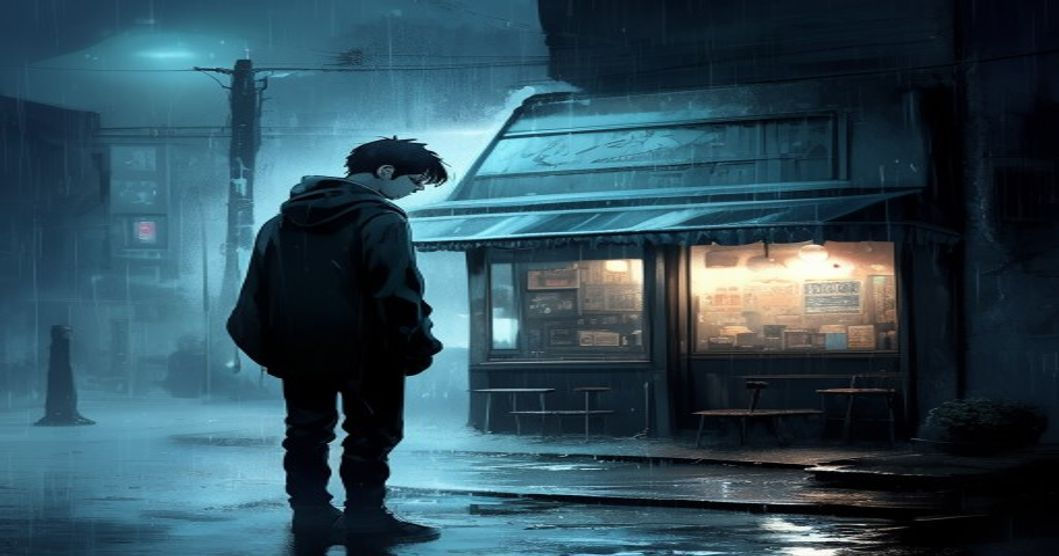
Picture a quiet street corner under a steady rain. Denji stands alone at the promised meeting spot. There is no one else. There is only the rhythmic sound of falling rain and the distant hum of passing cars. This was the moment—the rendezvous at the cafe he and Reze had agreed upon. Yet, in this scene, the very "place" he was searching for is nowhere to be found. It simply isn't there.
The False Comfort of a Fabricated Reality
When Reze invites Denji, her smile is incredibly gentle. In the manga panels, her eyes are drawn with a soft, delicate warmth. Her tone is bright, almost as if she’s making a playful promise for an after-school hang. In that moment, Reze looks like any ordinary girl. There isn't a hint of the looming conflict or the tension of battle to be seen.
The brilliance of this approach lies in the contrast. The author uses beautiful, serene imagery to depict a "normal" everyday life. But this setting is a fabrication, a world constructed by Reze. Looking at these beautiful panels, the reader is momentarily tempted to believe that, perhaps, these two could find happiness. This sense of false security is a deliberate narrative device, designed to make the subsequent tragedy hit even harder. In many stories, a deceptive character is portrayed as overtly suspicious; here, however, the deception is so wrapped in beauty that the shock of betrayal is all the more devastating.
The cafe represents the "ordinary life" that both characters are denied. That is why, when we realize the setting was a lie from the very beginning, it leaves a profound, hollow ache in the reader's heart.
The Power of an Empty Space
Think back to that rainy scene where Denji waits alone. The "camera" doesn't linger on a close-up of Denji’s face; instead, it pulls back to show a wide, desolate street. No one is walking under an umbrella; no one is passing by. There is only the empty road and the persistent rain. Reze is nowhere to be seen.
I believe this technique—depicting someone through their absence—is masterfully calculated. We often feel the weight of a person more intensely after they are gone, or when we realize they were never truly there to begin with. In literary terms, this is the "presence of absence." Even though Reze is physically gone, her trace remains etched into Denji’s heart as an indelible mark. This pain of being bound to something invisible, layered with the loneliness of the visuals, is truly heartbreaking.
The fact that the person who *should* be there is missing actually amplifies Reze’s presence. Her existence is defined by that very void.
The Allure of the Unattainable
For Denji, Reze represents something inherently out of reach. Within the narrative, she acts as an unstoppable engine, driving his deepest desires. The promise at the cafe was the sweetest temptation of all—the lure of something he could never truly possess.
The mechanics of chasing the unattainable are inherently cruel. Reze is a phantom-like figure who momentarily fills the "void" within Denende. The cafe she presented was a tangible form of an unreachable ideal. Even knowing it might be a lie, Denji chases that illusion to find the strength to move forward. This sense of unfulfillment is the very force that propels the story. The desperate, insurmountable distance between desire and reality is what pulls the reader into the heart of the tale.
Nothing moves the human heart quite like that which cannot be held. This story masterfully utilizes the "lie" of the cafe to illustrate that very principle.
How a Broken Promise Completes the Story
By the end, Denji is left simply standing there. In the end, the promised place failed to bridge the gap between him and Reze. A "correct" place for them to meet simply did not exist in this world. It is as if the story is telling us that a path for them to be together was never paved from the start.
There is a profound sadness in how this conclusion is handled. It isn't just a tragic parting; it is the confrontation with an inescapable truth: that the structure of their relationship was designed to fail. The lie of the cafe, orchestrated by Reze, serves as the final proof that their love wasn't even a memory—it was an impossibility. This portrayal of tragedy as something inescapable is what elevates this work from a mere romance to something much more extraordinary.
The promised place never existed. And because of that, this love is completed in its most eternal, most tragic form: as something that can never, ever end.


Comments